
Why the UK are scrapping paper money and bringing in plastic banknotes
By Ellie Bagshaw

On the 20 February 2020 , the Royal Bank of England will release the new plastic twenty pound banknotes into circulation in the UK. This is following the success of the 5 pound and 10 pound notes which were changed from paper to plastic material in 2016 and 2017.
The new twenty pound banknote will feature English Romantic Painter, JMW Turner. Turner was born in 1775 and is one of England’s most renowned artists. His most famous painting is called ‘The Fighting Temeraire’ which resembles a historic ship during the Battle of Trafalgar.
The 5 pound notes displayed Winston Churchill whereas the ten pound notes featured Jane Austin.
The plastic note will be made of polymers instead of classic paper materials. It will have distignuished features such as having three cluster-raised dotes which will aid blind and partially-blinded people to determine the value of the note.
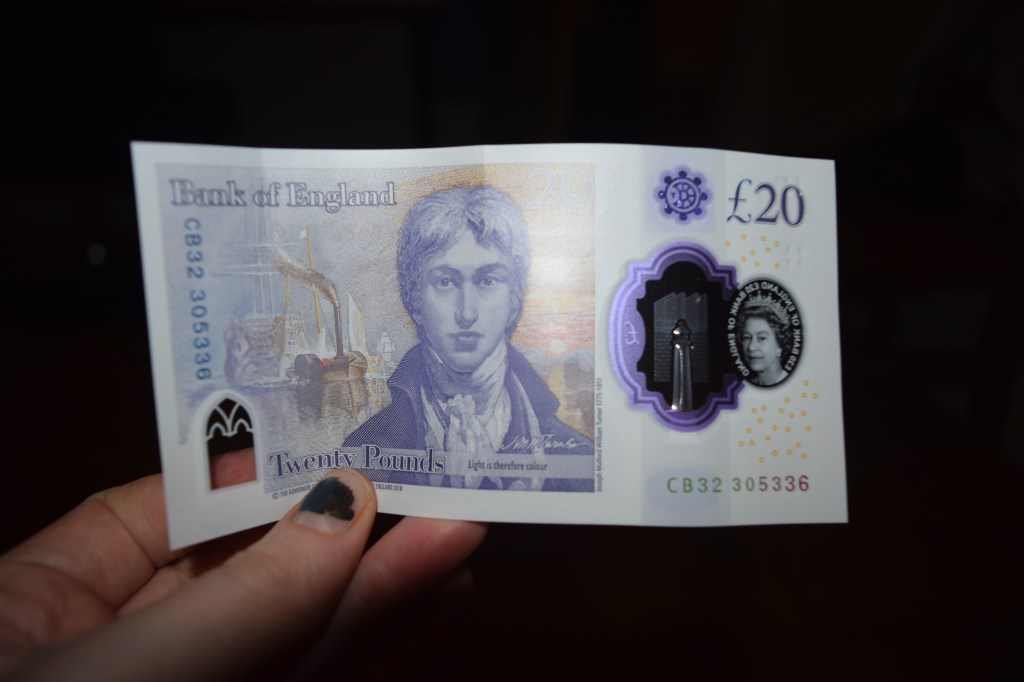
There are several reasons for the change to polymer bank notes.
Bank of England Governor Mark Carrey stated that “polymer notes last more than twice as long as paper notes”.
Polymer material is also deemed to be safer than paper notes and be better for the environment due to its recyclability and longetivity.
However there has been some debate over the gradual change. The Bank of England confirmed in 2016 that the new material contains traces of animal fat called tallow which is made from rendered beef and mutton. This caused anger in the vegan and vegetarian community when the five and ten pound notes were put into circulation. Therefore it is without a doubt that this anger will arise again with the introduction of the new £20 notes.
Figures gained through Freedom of Information requests also showed that nearly 50 million of the 5 and 10 pound polymer notes have had to be replaced since their release into UK circulation in 2016.
The Bank of England have however commented on these figures stating that they “mainly relate to folds, tears, holes and foil wear and is consistent with the general wear expected for bank notes.”
 Ellie Bagshaw Photography Journalism